
 |
Prepared by Scott R. Siler
Founder, Exergy International · Creator, Political Risk Demystified
Founder, Exergy International · Creator, Political Risk Demystified
In this issue
Who's hiring · Hormuz at Six Months: $330… · The Sanctions Came Off. The…
30 Added this week 121 still open | Roles per week — last 6 weeks
| ||||||||||||||||||
Senior Strategy Consultant - Foreign Affairs CGI · Arlington, VA |
Insurance Projects Specialist (Political Risk Insurance Underwriter) U.S. International Development Finance Corporation · Washington DC-Baltimore Area |
2027 Early Careers: Analyst, Underwriting – Political Risk – United States, New York, NY AIG · New York, NY |
Risk Analyst Marsh McLennan |
Resilience Practice Leader, Strategic Risk Consulting, Marsh Risk Pacific Marsh McLennan |
Every political risk role we track, refreshed daily from 24 sources, with an AI application assistant on every listing.
| Browse the board |
|
Of those, 7 are curated for Career Insider — pulled before they reach the public boards. $9.99/mo.
| POLITICAL RISK SPOTLIGHT |
Hormuz at Six Months: $330 Billion the Benchmark Never Priced
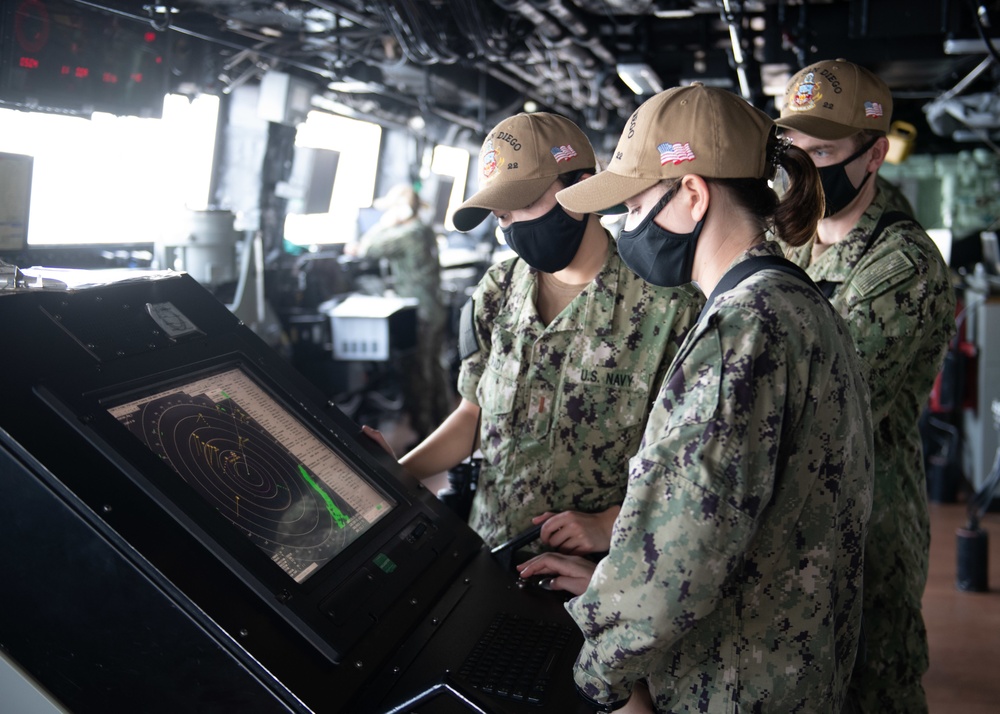 Sailors stand bridge watch aboard the USS San Diego. Escort and interdiction have continued in and around the strait as tanker attacks resume. |
Six months into the US–Iran conflict, the Strait of Hormuz has become the most expensive stretch of water in the world and the least priced. Talks between Iran and Oman on temporarily reopening the strait pulled Brent down three sessions running to the high eighties and drained what was left of the risk premium. Within days US forces struck Iranian sites in the strait, Tehran warned it would answer a tightened blockade militarily, Iran resumed firing on its Gulf neighbours after a month's lull, and two more tankers were attacked. Importers have now paid roughly $330 billion in extra costs for seaborne crude, refined products and LNG since the disruption began — a transfer the front-month price has largely stopped registering.
| — | Shipping exposure has not tracked the price. US forces cleared sea mines laid in the strait and called it a milestone; tankers were attacked again within the week. Clearance changes the hazard, not the intent behind it. |
| — | Import costs have migrated out of the benchmark. The $330 billion shows up in freight, war-risk cover and routing rather than in Brent, which is why a falling headline price has coincided with rising landed cost. |
| — | The sanctions architecture is tightening while the shooting continues. Treasury indefinitely suspended five general licences under the Iranian Transactions and Sanctions Regulations, and lawmakers are pressing it to reach Chinese banks — counterparty legality is moving faster than the market is. |
| — | Alliance management is deteriorating. Iran has fired on Gulf states, a Saudi tanker was stopped, and Peru has cut diplomatic ties, widening a Gulf conflict into a diplomatic one well outside the region. |
| — | Second-order humanitarian effects are landing. Relief agencies report programmes for roughly 1.5 million people wiped out by the oil shock, as fuel and freight costs consume budgets set before the disruption. |
| — | Official framing and exposure have diverged. The Vice President declines to call it a war and the President calls it small potatoes, six months in — language that matters where insurance wordings and force-majeure clauses turn on the distinction. |
PRDM Analysis The market has decoupled price from risk, and the mechanism is repricing rather than complacency. A risk premium compensates for expected disruption; after six months of a contested strait, traders have moved a chronic blockade from shock into baseline, and a baseline carries no premium. That is why an Oman talks headline can take three sessions off Brent while mines, strikes and tanker attacks continue underneath it. The cost did not disappear when the premium did — it moved, out of the front-month contract and into freight rates, war-risk cover and the longer routes around the disruption, which is exactly where the $330 billion sits. A benchmark that no longer carries the risk is no longer an instrument for reading it. |
Signal Takeaway Organizations with energy exposure should stop treating Brent as the Hormuz indicator and start watching war-risk premiums, charter rates and routing distance, which is where the cost now accumulates. The licence suspensions deserve separate attention from procurement and compliance: counterparty legality can change without any price signal at all, and a general licence withdrawn indefinitely is a contract problem before it is a market one. Insurers and legal teams should also test how their wordings treat a conflict that officials decline to call a war — war exclusions and force-majeure triggers were not drafted for that ambiguity. |
The Sanctions Came Off. The Control Did Not.
Washington has converted a decade of sanctions pressure on Venezuela into an ownership position. The administration announced a deal it describes as giving the United States majority control over a large share of Venezuelan oil reserves, with the Pentagon holding a stake covering roughly a fifth of them, and Chevron and Eni moving within days to expand operations and double output. Fields previously run by Chinese and Russian operators are passing to a US-backed firm. Standing in Caracas, the Energy Secretary said Washington will control the flow of funds from the arrangement — the least discussed provision, and the one that defines what this actually is.
| — | Sanctions leverage converts into equity. Denial was the instrument for a decade; ownership replaces it. Washington gives up the sanctions lever and acquires a claim on the asset itself, which is a different kind of hold and a far harder one to reverse. |
| — | Chinese and Russian operators lose the asset base. Fields those firms ran pass to a US-backed operator without a single new sanction being levied on either country — displacement achieved commercially rather than punitively. |
| — | Strategic reserve policy turns hemispheric. Refilling the SPR with Venezuelan heavy crude ties an emergency instrument to a single supplier whose government Washington has spent ten years trying to remove. |
| — | Refining exposure concentrates on the Gulf Coast. Venezuelan heavy crude runs on specific capacity, most of it in one weather-exposed stretch of US coastline, narrowing where a disruption has to land to matter. |
| — | Political legitimacy stays unresolved. The counterparty is an interim government, while the former president contests US drug-trafficking charges on immunity grounds — an ownership stake resting on an arrangement no court has yet tested. |
| — | The price claim and the timeline diverge. The deal was sold on substantially lower pump prices; the Energy Secretary puts relief a few years out. That gap is where the political risk to the deal itself sits. |
PRDM Analysis Sanctions and equity are both control instruments, and this is a switch between them rather than a release. Denial-based control is cheap to impose and almost impossible to calibrate: it degrades the target's output, but it pushes the target toward whoever will still transact, which for a decade meant Beijing and Moscow. Ownership-based control is expensive and entangling, but it does two things denial never could — it puts Washington inside the revenue mechanism rather than outside it, and it removes rival operators from the asset base without a confrontation. That is why the parties who lost most here were never sanctioned. The retained control over the flow of funds is the tell: a government that intended normalization would not need it. |
Signal Takeaway Organizations with exposure to Venezuelan production, Gulf Coast refining, or joint ventures alongside Chinese and Russian operators in the region should treat the funds-control mechanism as the live variable, not the headline output figures. Watch its legal form: an arrangement resting on executive discretion rather than statute is one election from renegotiation, and counterparties will price that. Displaced operators have arbitration options worth tracking, and any continuity plan that assumes the SPR is supplier-diverse needs revisiting. |
Canada's Two-Track Response to Trump's Tariffs: Provincial Retaliation Meets Federal Relief
Canada's response to Trump's tariff pressure is splitting into two distinct tracks — provincial retaliation and federal cushioning — as Alberta Premier Danielle Smith weighs a tax on U.S. liquor imports while still hoping for a negotiated trade deal, even as Ottawa moves to extend its fuel-tax holiday into next year.
| — | Provincial retaliation raises the prospect of a patchwork of Canadian countermeasures rather than a single federal negotiating position |
| — | Consumer relief measures like the extended gas tax holiday signal Ottawa's priority on shielding households from tariff-driven cost pressure |
| — | U.S. spirits exporters face direct exposure if Alberta's liquor-board authority is used to impose a retaliatory tax |
| — | Federal-provincial coordination gaps widen as Alberta threatens unilateral action while professing continued interest in a deal |
| — | Negotiating leverage ambiguity grows as Canada simultaneously signals openness to talks and readiness to escalate |
PRDM Analysis Provincial liquor boards give Alberta a retaliation lever that doesn't require federal treaty action, letting it strike quickly at U.S. exporters — but that same sub-national authority means Canada's overall posture toward Washington can look inconsistent even as federal relief measures try to calm domestic politics around tariff costs. |
Signal Takeaway Track provincial-level trade actions separately from federal Canadian trade policy, and watch whether Alberta's booze tax threat converts into actual policy before or after the anticipated deal timeline. |
PRDM Pulse Signals shaping the geopolitical environment
|
COURSES
PRDM University Structured training in political risk analysis — frameworks, applied exercises, and a capstone, built from the same material Scott teaches at GWU's Elliott School. Introduction to Political Risk Analysis — $25 Start here. Learn the core analytical frame and find out whether this work is for you. Executive PRA — $297 For leaders who commission analysis rather than produce it: how to evaluate, brief, and act on a risk assessment. PRA Accelerator — $497 The full practitioner track — applied exercises, a capstone assessment, and a certificate you can put in front of an employer. PRDM readers take $100 off the Accelerator with code PRDM100. |
Field Manual
Navigating the Uncertainty Business How to Build a Career in Political Risk Analysis · Scott R. Siler A field manual for professionals building careers in political risk — grounded in judgment, positioning, and decision-making under uncertainty. Built for professionals serious about entering or advancing in the field.
PRDM readers receive 20% off with code PRDM19. |
PRDM Channel
Geopolitics, political risk, career insights Weekly geopolitical briefings and political risk analysis.
|
| LOOKING AHEAD |
Next issue
|
Until next time, Best, Founder, Exergy International | Creator, Political Risk Demystified (PRDM) |
