
____________________________________________________________
Issue 04 | August 28, 2026
____________________________________________________________
PRDM Insider returns with a sharper focus. Each issue delivers a political risk briefing — decoding a major development, tracking systemic signals, and sharing institutional updates from Exergy and the PRDM Community.
Prepared by Scott R. Siler — Founder, Exergy International · Adjunct Professor, GWU Elliott School · Creator, Political Risk Demystified
In this issue
Who's hiring · US–Canada Trade Talks Collapse… · Kremlin's September Playbook:…
48 Added this week 158 live on the board | Roles per week — last 6 weeks
| ||||||||||||||||||
Mid-Career Asia-Pacific Geopolitical Intelligence Analyst Emergent Risk International · Chicago, IL |
Assistant Professor, Political Science and International Relations University of San Diego · San Diego, CA |
Legal Research & Advocacy Post Graduate Fellowship (Remote) Commonwealth Human Rights Initiative (CHRI)-Africa Office · Post, OR |
Senior Research Analyst/Fellow, Turkey Program Foundation for Defense of Democracies (FDD) · Washington, DC |
Postdoctoral Research Scholar CommLabASU at Arizona State University · Valley, WV |
Every political risk role we track, refreshed daily from 24 sources, with an AI application assistant on every listing.
| Browse the board |
|
Of those, 10 are curated for Career Insider — pulled before they reach the public boards. $9.99/mo.
COURSES
PRDM University Structured training in political risk analysis — frameworks, applied exercises, and a capstone, built from the same material Scott teaches at GWU's Elliott School. Introduction to Political Risk Analysis — $25 Start here. Learn the core analytical frame and find out whether this work is for you. Executive PRA — $297 For leaders who commission analysis rather than produce it: how to evaluate, brief, and act on a risk assessment. PRA Accelerator — $497 The full practitioner track — applied exercises, a capstone assessment, and a certificate you can put in front of an employer. PRDM readers take $100 off the Accelerator with code PRDM100. |

| POLITICAL RISK SPOTLIGHT |
US–Canada Trade Talks Collapse Over Truck Tariffs. Retaliation Starts September 8.
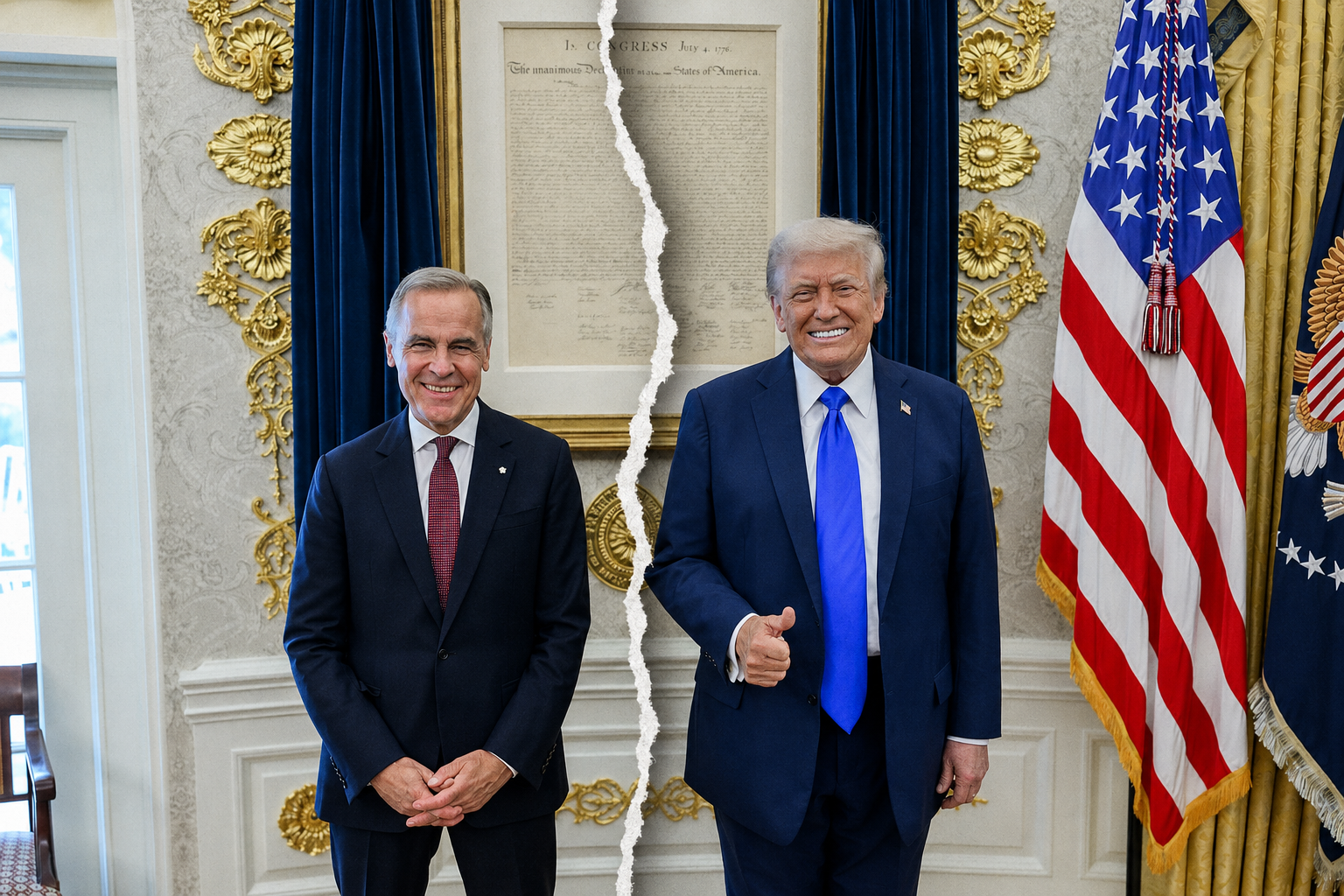 Carney and Trump in Washington, October 2025. Talks collapsed this month over truck tariffs; Canadian retaliation begins September 8. Official White House photo. |
Trade negotiations between Washington and Ottawa collapsed over a last-minute Canadian demand for relief from US tariffs on medium- and heavy-duty trucks. Within days the United States imposed 50 percent duties on roughly $20 billion of Canadian goods, and Prime Minister Mark Carney suspended talks rather than return to the table. Carney has since called the tariffs a miscalculation, told Canadians their country is effectively at war with its largest trading partner, and ordered matching dollar-for-dollar retaliation. A request for one sector carve-out has become the trigger for a full rupture in the continent's most integrated trading relationship.
| — | Retaliation now has a date. Canada's matching duties take effect September 8, converting an open dispute into a scheduled cost that importers on both sides can already price. |
| — | Automotive and freight supply chains are sourcing across a 50 percent duty with no negotiated floor and no active talks to remove one. |
| — | USMCA review dynamics harden, because a single sector carve-out has now been shown capable of collapsing an entire negotiation — raising the bar for every exemption sought in the scheduled reassessment. |
| — | Alliance management moves out of the trade file. Carney's “at war” framing binds the dispute to Canadian political identity, narrowing the room any government there has to settle quietly. |
| — | Continuity and duty of care exposure rises for firms with plants, staff, or contracts on both sides of the border, where customs friction and rerouting will arrive well before the tariff schedules resolve. |
PRDM Analysis The collapse shows what happens when a tariff stops functioning as a bargaining instrument and becomes an instrument of industrial protection. Relief on a single sector is normally the easiest thing to trade away; here it was refused, because granting it would have established that any protected industry can be exempted on request. Once precedent rather than price is the thing under negotiation, the zone of possible agreement narrows to almost nothing, and both governments are left choosing between capitulation and escalation — with escalation the cheaper option domestically for each of them. |
Signal Takeaway Organizations with cross-border manufacturing, freight, or procurement exposure should treat the September retaliation date as a planning milestone rather than a negotiating deadline, and model tariff persistence through the USMCA review rather than a near-term reset. Watch which Canadian sectors appear on the retaliation list: the selection will indicate whether Ottawa is calibrating for leverage or for domestic political effect, and those two paths have very different durations. |
Kremlin's September Playbook: Elections First, Mobilization Second
Ukrainian President Volodymyr Zelenskiy said Russia plans to draft roughly 300,000 additional troops once its parliamentary elections conclude, a sequencing that keeps a politically unpopular mobilization wave off the ballot while Western lawmakers weigh a fresh round of sanctions.
| — | Electoral timing shields Kremlin candidates from immediate backlash over a large new conscription push. |
| — | Sanctions momentum builds in the US Congress as lawmakers consider longer-range measures tied to the mobilization signal. |
| — | Donbas annexation rhetoric hardens Moscow's negotiating baseline, framing the region as already integrated rather than contested. |
| — | Ukraine's planning horizon shifts, as Kyiv must anticipate a larger Russian force posture arriving within weeks of the vote. |
| — | European sanctions coordination faces pressure to move in step with Washington rather than lag behind it. |
PRDM Analysis Delaying the draft until after the vote is a mechanism for insulating domestic politics from war costs — it lets the Kremlin present the election as stability-affirming before absorbing the manpower and economic strain of a new mobilization wave. Pairing that with rhetoric treating Donbas as settled territory signals Moscow is negotiating from a position it intends to entrench, not concede. |
Signal Takeaway Track US Congressional sanctions timelines against the post-election mobilization window, and watch whether European capitals synchronize new measures or wait for Washington to move first. |
| FROM THE COMMUNITY |
Analysis and work from PRDM members
US–Iran War: Macro Strategy Brief Jared Finkel Jared prices three paths for the US–Iran war and puts 55 percent on the one markets have already bought — a bounded, sustained exchange with no ground engagement. The value is in what that leaves unpriced: a dual-chokepoint crisis at Hormuz and Bab el-Mandeb carrying Brent toward $140. He also reads the August Mecca defense pact as regional security architecture built without a great-power sponsor. |
Working on something you want in front of the field? Reply with a link — I read
everything that comes in.
Field Manual
Navigating the Uncertainty Business How to Build a Career in Political Risk Analysis · Scott R. Siler A field manual for professionals building careers in political risk — grounded in judgment, positioning, and decision-making under uncertainty. Built for professionals serious about entering or advancing in the field.
PRDM readers receive 20% off with code PRDM19. |
PRDM Pulse Signals shaping the geopolitical environment
|
PRDM Channel
Geopolitics, political risk, career insights Weekly geopolitical briefings and political risk analysis.
|
| LOOKING AHEAD |
Next issue
|
